
“Learn about malaria, including its causes, symptoms, diagnosis, treatment, recovery, prevention, warning signs, and when to seek medical care”.
Malaria is a serious infectious disease that affects millions of people around the world every year. It is especially common in tropical and subtropical regions where mosquitoes that transmit the disease are present.
The good news is that malaria is preventable and treatable when diagnosed early. However, delaying treatment can sometimes lead to severe complications, particularly in young children, pregnant women, older adults, and people with weakened immunity.
In this article, we will explain what malaria is, how it spreads, its common symptoms, available treatment options, recovery, prevention, and when medical attention is necessary.
What Is Malaria?
Malaria is a disease caused by Plasmodium parasites. These parasites are transmitted to humans mainly through the bite of an infected female Anopheles mosquito.
After entering the body, the parasite travels to the liver, where it develops before entering the bloodstream. It then infects red blood cells. This process causes many of the symptoms associated with malaria, including fever, chills, sweating, headache, and weakness.
Several species of Plasmodium can cause malaria. Plasmodium falciparum is particularly important because it can cause severe malaria and can become life-threatening if treatment is delayed.
Causes of Malaria
The primary cause of malaria is infection with a Plasmodium parasite.
1. Infected mosquito bite
The most common way malaria spreads is through the bite of an infected female Anopheles mosquito. When the mosquito bites a person, parasites can enter the bloodstream.
2. Blood transmission
In less common situations, malaria can be transmitted through infected blood. This can occur through contaminated blood transfusions or shared contaminated needles.
3. Mother-to-child transmission
A pregnant woman with malaria can sometimes transmit the infection to her baby during pregnancy or around the time of delivery.
Malaria does not normally spread through casual contact, such as shaking hands, sitting next to someone, or sharing food.
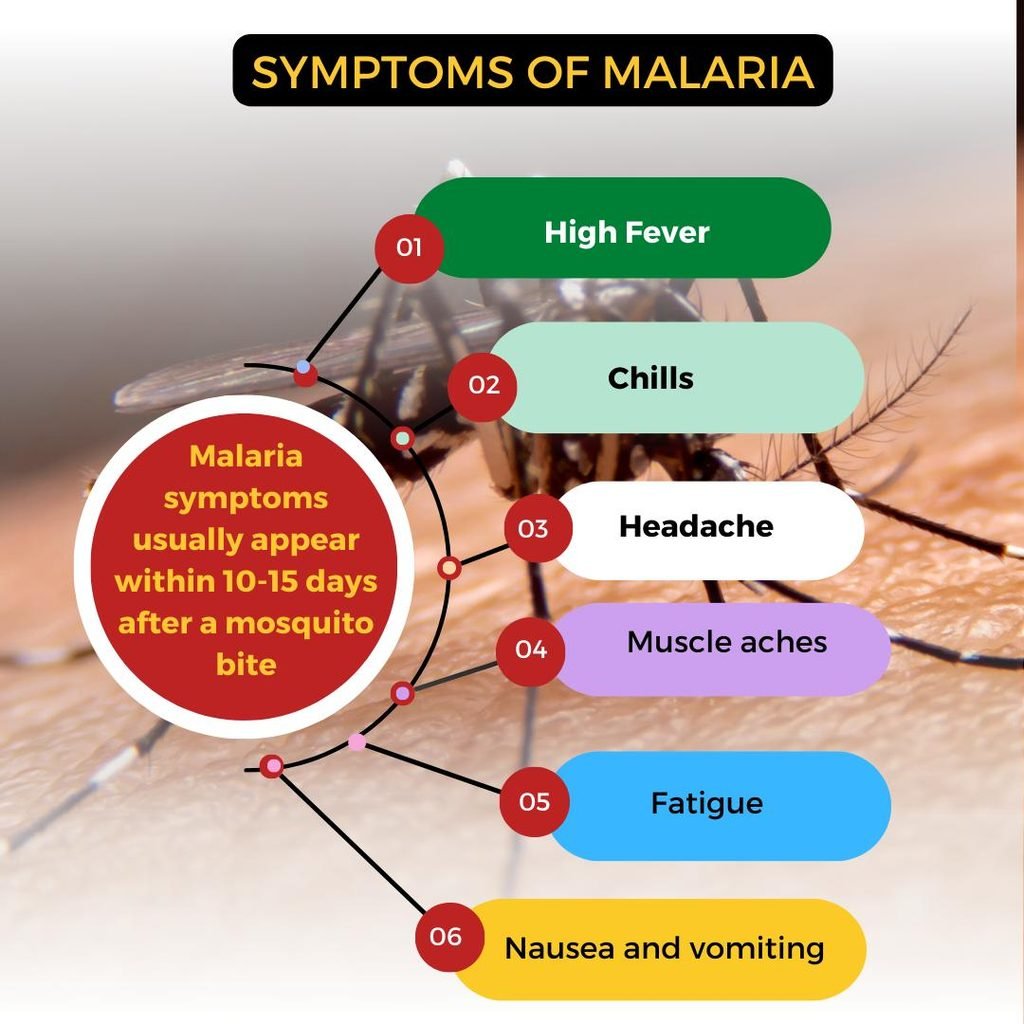
Common Symptoms of Malaria
Malaria symptoms can vary depending on the parasite species, the person’s immunity, and other factors.
Common symptoms include:
- Fever
- Chills or shivering
- Sweating
- Headache
- Muscle and body aches
- Tiredness and weakness
- Nausea
- Vomiting
- Abdominal discomfort
Some people may initially experience symptoms that resemble the flu or another common infection.
In some cases, symptoms can become severe. Warning signs may include:
- Difficulty breathing
- Confusion or unusual behavior
- Seizures
- Extreme weakness
- Loss of consciousness
- Severe anemia
- Jaundice
- Very low blood pressure
Severe symptoms require urgent medical care.
How Is Malaria Diagnosed?
A healthcare professional may suspect malaria based on symptoms, travel history, exposure to mosquitoes, and local malaria transmission.
The diagnosis is usually confirmed by testing a blood sample. Common diagnostic methods include microscopic examination of blood smears and rapid diagnostic tests. Molecular tests such as PCR may also be used in some settings.
Because malaria can become serious quickly, people with a possible exposure and compatible symptoms should seek medical evaluation rather than relying only on home treatment.
Treatment of Malaria
Malaria treatment depends on several factors, including:
- The Plasmodium species
- Whether the infection is uncomplicated or severe
- Where the infection was acquired
- Local drug resistance patterns
- The patient’s age and pregnancy status
- Other medical conditions and medicines
For uncomplicated malaria, doctors may prescribe specific antimalarial medicines. Artemisinin-based combination therapies are widely used for P. falciparum malaria in many parts of the world.
Other medicines may be appropriate for particular malaria species or circumstances. For example, treatment of P. vivax or P. ovale may require additional therapy to prevent relapse from parasites that can remain dormant in the liver.
Severe malaria is a medical emergency and generally requires treatment in a hospital. Intravenous artesunate is commonly recommended for severe malaria, followed by an appropriate oral antimalarial regimen once the patient can take medicines by mouth.
Important: Don’t self-medicate
Do not start or stop antimalarial medicines without medical advice. Taking the wrong medicine, incorrect dose, or incomplete treatment can increase the risk of treatment failure and complications.
Recovery and Expected Results
When malaria is diagnosed early and treated with an appropriate medicine, many people recover successfully.
Fever and other symptoms may improve after treatment begins, but recovery time varies. Some people may continue to feel tired or weak for days or longer after the infection has been treated.
The result of treatment depends on:
- How quickly treatment begins
- The type of malaria parasite
- Severity of infection
- The person’s age and overall health
- Whether the parasite is resistant to the medicine
Patients should complete the treatment exactly as prescribed, even if they begin feeling better.
If fever continues, returns, or symptoms become worse after treatment, medical evaluation is important.
How Can Malaria Be Prevented?
Preventing mosquito bites is one of the most important ways to reduce malaria risk.
Use mosquito protection
- Sleep under an insecticide-treated mosquito net where recommended.
- Use an appropriate mosquito repellent.
- Wear long-sleeved clothing and long trousers.
- Use window and door screens when available.
- Reduce mosquito breeding sites around homes where possible.
People travelling to areas where malaria is common may also need preventive antimalarial medication, depending on the destination and individual circumstances. A healthcare professional or travel medicine specialist can recommend an appropriate option.
When Should You See a Doctor?
Seek medical attention if you develop fever or other malaria-like symptoms after living in or traveling to an area where malaria occurs.
Seek urgent medical care if there is confusion, seizures, difficulty breathing, loss of consciousness, severe weakness, or other signs of serious illness.
Malaria can progress rapidly, particularly with P. falciparum, so waiting for symptoms to become severe is not recommended.
Final Result
Malaria is a serious but treatable and preventable infectious disease. It is caused by Plasmodium parasites and is most commonly transmitted through infected Anopheles mosquitoes.
Recognizing symptoms such as fever, chills, sweating, headache, body aches, and weakness can help people seek medical attention early. Proper testing and timely treatment are essential for a good outcome.
The best approach is not to ignore persistent fever, especially after mosquito exposure or travel to a malaria-endemic region. Early diagnosis, appropriate antimalarial treatment, and mosquito-bite prevention can significantly reduce the risk of serious complications.
Medical Disclaimer
This article is intended for general educational and informational purposes only. It is not a substitute for professional medical advice, diagnosis, or treatment. Malaria can become life-threatening, and treatment should be determined by a qualified healthcare professional based on the type and severity of infection. Do not self-medicate or delay medical care because of information provided in this article. If you suspect malaria or develop severe symptoms, seek medical attention promptly.
Post created by Dr Sailendra Kumar BHMS, medical officer under NHM, India.