
Introduction
Fibromyalgia is a long-term condition that causes widespread pain, fatigue, sleep problems, and increased sensitivity to pain. It can affect a person’s physical activity, work, sleep, mood, and overall quality of life.
Although there is no single cure for fibromyalgia, appropriate fibromyalgia treatment can help control symptoms and improve daily functioning. Treatment usually involves a combination of physical activity, healthy lifestyle habits, psychological support, and medicines when needed.
What Is Fibromyalgia ?
Fibromyalgia is a chronic pain condition in which the nervous system processes pain signals differently. As a result, a person may experience pain and tenderness in several areas of the body.
The severity of symptoms varies from person to person. Symptoms may also become better or worse at different times.
Fibromyalgia can occur together with other conditions, so proper medical evaluation is important.
Signs and Symptoms of Fibromyalgia
The most common fibromyalgia symptoms include :
1. Widespread Pain
Widespread muscle and body pain is one of the main symptoms of fibromyalgia. The pain may feel aching, burning, throbbing, or persistent.
2. Constant Fatigue
People with fibromyalgia may feel extremely tired even after sleeping. Fatigue can make normal daily activities difficult.
3. Sleep Problems
Difficulty falling asleep, frequent waking during the night, or waking up without feeling refreshed can occur.
4. Fibro Fog
Some people experience difficulty concentrating, remembering information, or thinking clearly. This is commonly called fibro fog.
5. Headaches
Some people with fibromyalgia experience headaches or migraine.
6. Muscle Stiffness
Muscle stiffness, particularly after waking up or remaining inactive for a long time, may occur.
7. Mood Changes
Anxiety, stress, and depression may occur alongside fibromyalgia and can make symptoms more difficult to manage.
8. Tingling or Numbness
Some individuals may experience sensations such as tingling, pins and needles, or numbness.
9. Digestive Symptoms
Some people may have abdominal discomfort, bloating, constipation, or diarrhea.
What Causes Fibromyalgia?
The exact cause of fibromyalgia is not completely understood.
Several factors may contribute, including:
- Abnormal processing of pain signals
- Genetic factors
- Physical or emotional stress
- Certain infections or illnesses
- Physical injury
- Poor sleep
- Other chronic pain conditions
Having one of these factors does not necessarily mean that a person will develop fibromyalgia.
How Is Fibromyalgia Diagnosed ?
There is no single test that confirms fibromyalgia.
A doctor usually considers:
- Medical history
- Symptoms and duration
- Physical examination
- Distribution of pain
- Sleep and fatigue problems
- Other associated symptoms
Blood tests or other investigations may be recommended to rule out other diseases that can produce similar symptoms.
Fibromyalgia Treatment
There is no universal treatment that works equally well for everyone. A personalized treatment plan is usually most effective.
1. Exercise and Physical Activity
Regular, gentle exercise is an important part of fibromyalgia treatment.
Activities may include:
- Walking
- Swimming
- Stretching
- Yoga
- Tai chi
- Low-impact aerobic exercises
Start slowly and increase activity gradually. Overexertion can sometimes worsen symptoms.
2. Improve Sleep
Good sleep is important for managing fibromyalgia fatigue and pain.
Helpful habits include:
- Maintain a regular sleep schedule.
- Create a relaxing bedtime routine.
- Keep the bedroom comfortable and quiet.
- Avoid excessive screen use before bedtime.
- Discuss persistent sleep problems with your doctor.
3. Stress Management
Stress may increase the perception of pain and worsen fatigue.
Relaxation techniques such as breathing exercises, meditation, mindfulness, and gentle yoga may help some people.
4. Psychological Therapy
Cognitive behavioral therapy (CBT) can help some patients develop better strategies for managing chronic pain, stress, anxiety, and negative thought patterns.
5. Medicines
Doctors may prescribe medicines depending on the person’s symptoms and other health conditions.
Some medicines used in fibromyalgia management include:
- Duloxetine
- Milnacipran
- Pregabalin
- Amitriptyline
- Other medicines when appropriate
The choice of medicine should be made by a qualified healthcare professional. Do not start, stop, or change prescription medicines without medical advice.
6. Healthy Lifestyle
A healthy lifestyle can support fibromyalgia management.
Try to:
- Eat a balanced diet.
- Stay physically active.
- Maintain a regular sleep schedule.
- Manage stress.
- Avoid prolonged inactivity.
- Maintain a healthy weight.
- Follow your doctor’s treatment plan.
Can Fibromyalgia Be Cured ?
Currently, there is no single cure for fibromyalgia. However, symptoms can often be managed.
The goal of treatment is to reduce pain and fatigue, improve sleep and physical function, and help the person maintain a better quality of life.
Some people experience significant improvement when they consistently follow an individualized treatment plan.
Expected Results of Fibromyalgia Treatment
The results of treatment vary from person to person.
Successful management may lead to:
- Less widespread pain
- Better sleep
- Reduced fatigue
- Improved physical activity
- Better concentration
- Improved mood
- Greater ability to perform daily activities
- Better quality of life
Treatment may take time, and symptoms can fluctuate. Consistency with exercise, sleep management, stress reduction, and prescribed treatment is important.
When Should You See a Doctor ?
You should consult a healthcare professional if you have persistent widespread pain, unexplained fatigue, sleep problems, or symptoms that interfere with your daily life.
Seek medical evaluation if symptoms are severe, new, rapidly worsening, or associated with unusual symptoms such as significant weakness, fever, unexplained weight loss, or swollen joints.
Frequently Asked Questions About Fibromyalgia
Is fibromyalgia a serious disease ?
Fibromyalgia can significantly affect quality of life, sleep, work, and daily activities. However, it does not usually cause progressive damage to muscles or joints.
What is the best treatment for fibromyalgia ?
There is no single best treatment for everyone. A combination of gradual exercise, good sleep, stress management, psychological support, and appropriate medicines may provide the best results.
Can exercise help fibromyalgia ?
Yes. Gentle and gradually increased physical activity can help improve physical function and reduce some symptoms.
Is fibromyalgia permanent ?
Fibromyalgia is generally considered a chronic condition. Symptoms may fluctuate over time, and many people can achieve better symptom control with appropriate management.
Yes. Fatigue is one of the most common symptoms of fibromyalgia and can be associated with poor-quality sleep.
Final Conclusion
Fibromyalgia is a chronic condition characterized by widespread pain, fatigue, sleep problems, and other symptoms that can affect everyday life. Although there is no single cure, effective fibromyalgia treatment can help control symptoms and improve quality of life.
A combination of regular gentle exercise, healthy sleep habits, stress management, psychological support, and appropriate medication can be helpful. Because symptoms and treatment responses vary, patients should work with a qualified healthcare professional to develop an individualized treatment plan.
If you have persistent widespread pain or unexplained fatigue, do not ignore the symptoms. Proper medical evaluation can help identify the cause and guide appropriate treatment.
Medical Disclaimer: This article is intended for general health education and does not replace consultation, diagnosis, or treatment from a qualified healthcare professional.
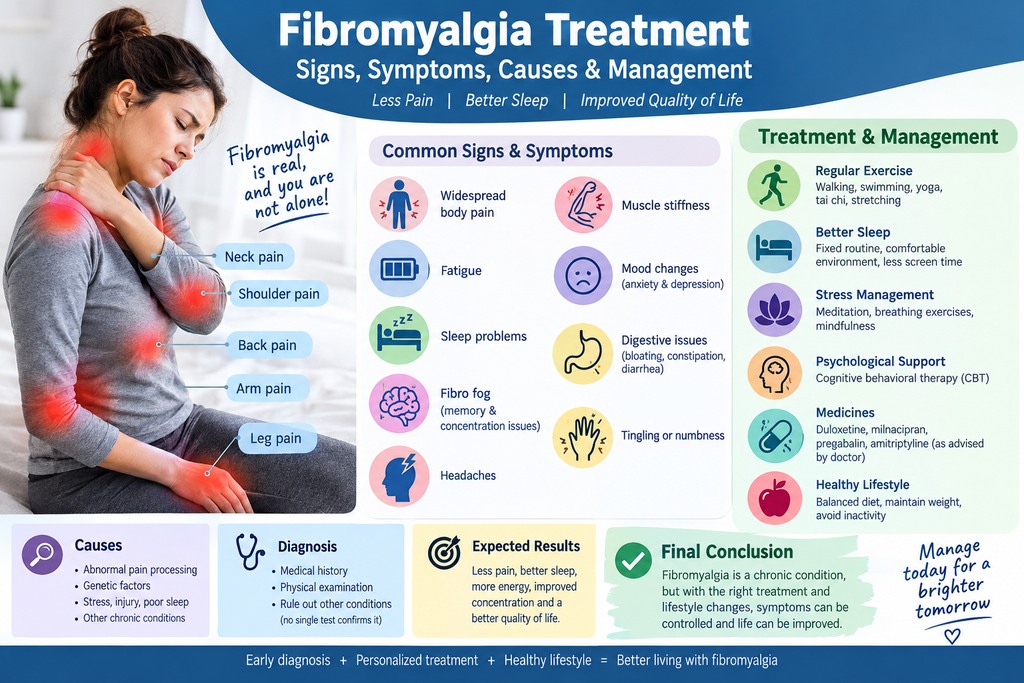
The image is showing FIBROMYALGIA symptoms and signs.
Post written by : Dr. Sailendra Kumar, BHMS Agra u, india .