
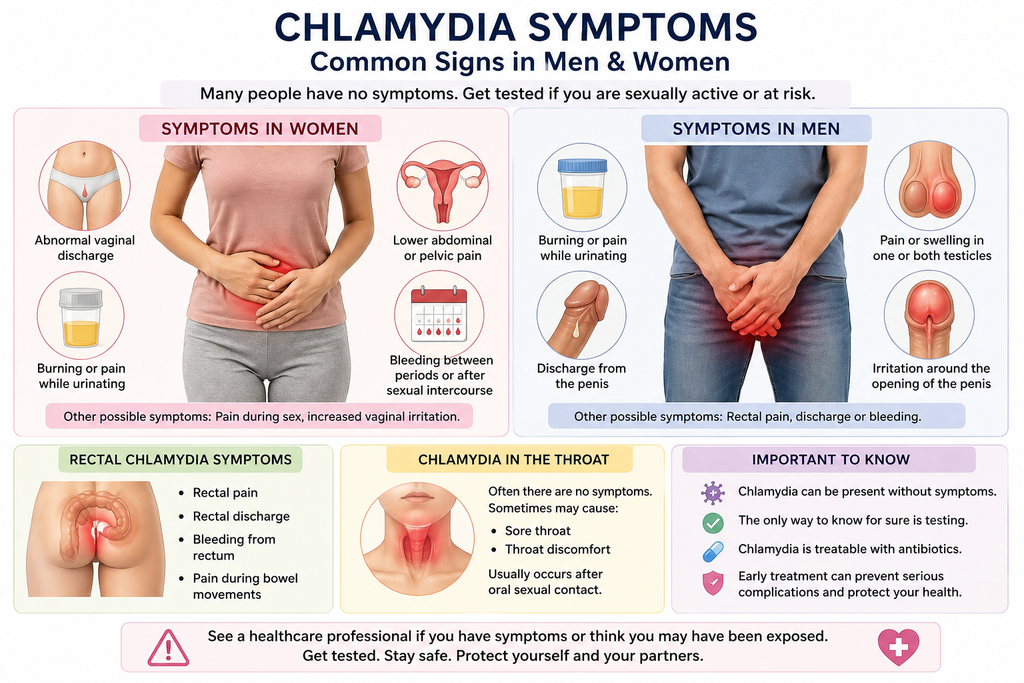
Chlamydia is one of the most common sexually transmitted infections (STIs). It is caused by the bacterium Chlamydia trachomatis and can affect both men and women. One of the biggest challenges with chlamydia is that many infected people do not have noticeable symptoms. Because of this, a person may have the infection and unknowingly pass it to a sexual partner.
When symptoms do occur, they may appear several weeks after exposure and can sometimes be mild enough to be mistaken for another infection. Early testing and appropriate treatment are important because untreated chlamydia can cause serious complications, particularly in women.
What Is CHLAMYDIA
Chlamydia is a bacterial infection that is mainly transmitted through sexual contact. It can infect the cervix, urethra, rectum and, less commonly, the throat or eyes.
The infection can spread through vaginal, anal or oral sexual contact with an infected person. A person can also become infected again after treatment if they have sexual contact with an untreated partner.
Importantly, chlamydia can be present without symptoms, so feeling healthy does not necessarily mean that someone is free from the infection.
Common Symptoms of Chlamydia
Many people with chlamydia have no symptoms. When symptoms occur, they can differ between men and women.
Chlamydia Symptoms in Women
Possible symptoms include:
- Abnormal vaginal discharge
- Burning or pain while urinating
- Pain during sexual intercourse
- Lower abdominal or pelvic pain
- Bleeding between menstrual periods
- Bleeding after sexual intercourse
- Increased vaginal irritation
Some women may initially mistake these symptoms for a urinary tract infection or another vaginal infection.
Chlamydia Symptoms in Men
Men may experience:
- Burning or pain during urination
- Discharge from the penis
- Pain or swelling in one or both testicles
- Irritation around the opening of the penis
- Rectal pain, discharge or bleeding if the rectum is infected
Even when symptoms are mild, medical evaluation and testing are important.
Rectal Chlamydia Symptoms
Chlamydia can also infect the rectum, particularly following receptive anal sex. Some people have no symptoms, while others may experience:
- Rectal pain
- Rectal discharge
- Bleeding from the rectum
- Pain during bowel movements
Anyone experiencing these symptoms should consult a healthcare professional for appropriate testing.
Chlamydia in the Throat
Chlamydia can sometimes infect the throat after oral sexual contact. Throat infections frequently cause no symptoms. When symptoms occur, they may include a sore throat or throat discomfort.
Because symptoms can be absent, testing may be recommended depending on a person’s sexual exposure and risk factors.
When Do Chlamydia Symptoms Appear ?
Chlamydia symptoms do not always appear immediately after infection. Some people develop symptoms within a few weeks, while others remain symptom-free.
This is why relying only on symptoms is not a reliable way to determine whether someone has chlamydia. Testing is the best way to identify an infection.
How Is Chlamydia Diagnosed ?
Healthcare professionals commonly diagnose chlamydia using laboratory tests.
Depending on the person’s symptoms and sexual exposure, testing may involve:
- A urine sample
- A vaginal or cervical swab
- A urethral swab in some circumstances
- A rectal swab when rectal infection is suspected
- A throat swab when throat infection is suspected
People who have been exposed to chlamydia or have symptoms should speak with a healthcare professional about which test is appropriate.
Treatment for Chlamydia
Chlamydia is a treatable bacterial infection. Doctors generally prescribe antibiotics according to current clinical guidelines and the individual’s circumstances.
It is important to:
- Take the prescribed medicine exactly as directed.
- Complete the recommended treatment.
- Avoid sexual contact for the period advised by the healthcare professional.
- Ensure recent sexual partners are evaluated and treated when appropriate.
- Follow recommendations for repeat testing.
Do not take antibiotics without medical advice. The correct antibiotic and treatment duration depend on the person’s situation.
Why Is Early Treatment Important ?
Although chlamydia can be treated successfully, delaying treatment can increase the risk of complications.
Complications in Women
Untreated chlamydia can spread to the reproductive organs and may cause pelvic inflammatory disease (PID). PID can damage the fallopian tubes and may increase the risk of:
- Infertility
- Ectopic pregnancy
- Chronic pelvic pain
Complications in Men
In men, untreated infection can sometimes cause inflammation of the epididymis, the tube located behind the testicle. This can result in pain and swelling.
Chlamydia may also increase the risk of acquiring or transmitting other sexually transmitted infections.
Chlamydia During Pregnancy
Chlamydia during pregnancy requires medical attention. An untreated infection can increase the risk of complications and can be transmitted to the baby during childbirth.
Pregnant women should discuss STI screening and treatment with their healthcare provider. Appropriate treatment can help reduce the risk of complications.
How Can Chlamydia Be Prevented ?
Several measures can reduce the risk of chlamydia and other STIs:
- Use condoms correctly and consistently.
- Have an open conversation with sexual partners about STI testing.
- Get tested when recommended by a healthcare professional.
- Avoid sexual contact with a partner who has an untreated STI.
- Ensure sexual partners receive appropriate evaluation and treatment when necessary.
- Remember that having no symptoms does not rule out an STI.
Regular testing is particularly important for people who have new or multiple sexual partners or other risk factors.
When Should You See a Doctor ?
You should consider medical evaluation if you have:
- Burning during urination
- Unusual genital discharge
- Pelvic or lower abdominal pain
- Pain or swelling in the testicles
- Bleeding after sex or between periods
- Rectal pain, discharge or bleeding
- A sexual partner who has been diagnosed with chlamydia
People who believe they may have been exposed should seek professional advice even if they feel completely well.
Final Result
Chlamydia is a common bacterial sexually transmitted infection that often causes no symptoms. When symptoms occur, they may include abnormal discharge, burning during urination, pelvic pain, pain during sex, testicular discomfort, or rectal symptoms.
The good news is that chlamydia is treatable with appropriate antibiotics. Early diagnosis and treatment can help prevent complications and reduce transmission to others.
Final Conclusion
Chlamydia should not be ignored simply because symptoms are mild or absent. If you think you may have been exposed, the safest approach is to consult a healthcare professional and get the appropriate test. Avoid self-medication and follow the treatment instructions provided by your doctor.
Remember: No symptoms does not always mean no infection. Testing, timely treatment and prevention are the keys to protecting your sexual and reproductive health.
Medical disclaimer: This article is for general educational purposes and does not replace consultation, diagnosis or treatment from a qualified healthcare professional.
Written by : Dr. Sailendra kumar BSc. BHMS Agra U. Up,INDIA.
This is the very good awareness for the people who have above symptoms, and they consult to the Doctor.
This is the very good awareness for the people who have above symptoms, and they consult to the Doctor.