Introduction –
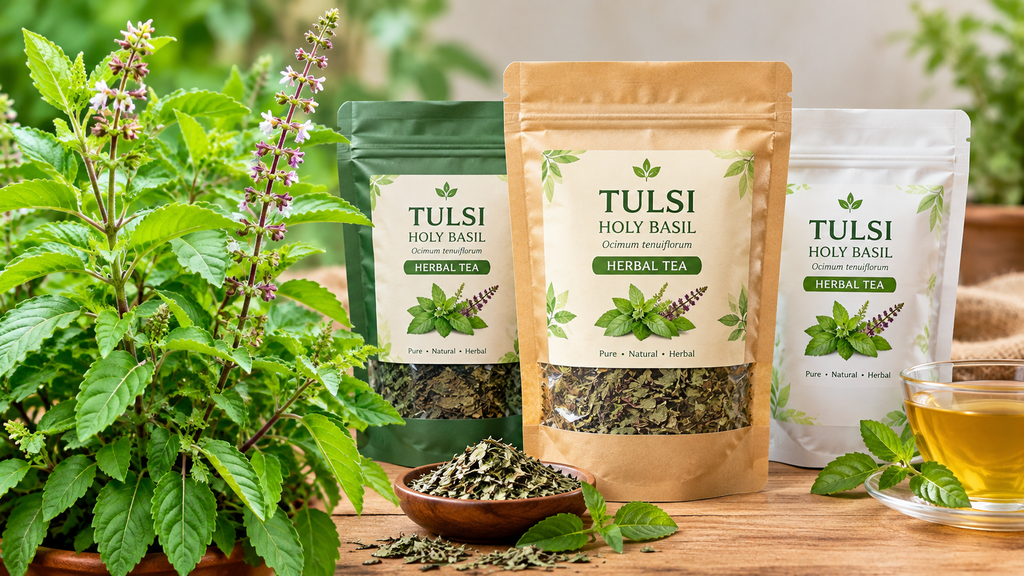
Tulsi, commonly known as Holy Basil, is one of India’s most respected traditional herbs. Scientifically known as Ocimum tenuiflorum (also called Ocimum sanctum), Tulsi has been used in Ayurveda for generations.
Today, Tulsi is gaining attention beyond traditional medicine because researchers are investigating its possible effects on stress, mood, sleep and general wellbeing.
Stress has become a common part of modern life. Work pressure, lack of sleep, financial concerns, excessive screen time and personal responsibilities can all contribute to psychological stress. Many people therefore look toward lifestyle measures and traditional herbs such as Tulsi as part of their wellness routine.
But what does modern research actually say about Tulsi and stress?
What Is Tulsi?
Tulsi is an aromatic plant belonging to the basil family. Several varieties are traditionally cultivated in India, including Rama Tulsi, Krishna Tulsi and Vana Tulsi.
Tulsi leaves contain various naturally occurring plant compounds, including essential oils and polyphenolic constituents. Laboratory and clinical research has investigated Tulsi for several possible biological effects.
A systematic review of human studies found evidence suggesting potential benefits in areas including psychological stress, metabolic health and other health outcomes, while also emphasizing the need for additional research to clarify dosage, preparations and which people may benefit most.
Tulsi and Stress Relief: What Does Research Say?
One of the most interesting areas of Tulsi research is its potential relationship with stress.
A 2022 randomized, double-blind, placebo-controlled clinical trial included 100 adults experiencing stress. Participants received either a standardized Ocimum tenuiflorum extract or placebo for eight weeks.
The Tulsi group showed greater improvements in perceived stress and some measures of sleep compared with placebo. Researchers also observed changes in biological markers associated with stress, including hair cortisol and responses to an experimental stress test. The extract was reported to be well tolerated during the study.
An earlier randomized, double-blind, placebo-controlled study investigated a standardized Tulsi extract in 150 participants experiencing general stress. After six weeks, several stress-related symptoms and the overall symptom score improved more in the Tulsi group than in the placebo group.
These findings are encouraging, but they should not be interpreted as proof that ordinary Tulsi leaves or Tulsi tea will produce the same effects as standardized extracts used in clinical trials.
Potential Benefits of Tulsi
1. May Help Manage Everyday Stress
The strongest human research interest around Tulsi currently concerns stress. Some clinical trials suggest that standardized Tulsi preparations may help reduce subjective stress levels.
Tulsi may therefore be considered as one component of a healthy stress-management routine, alongside adequate sleep, physical activity, relaxation techniques and a balanced diet.
2. May Support Better Sleep
Stress and poor sleep often influence each other. The 2022 clinical trial reported improvements in subjective sleep measures among people taking standardized Tulsi extract. However, the researchers noted that more objective sleep research is needed.
Therefore, Tulsi should not be considered a substitute for medical treatment of persistent insomnia.
3. Traditionally Used for General Wellness
Tulsi has a long history of traditional use in India. Modern research has investigated possible antioxidant, anti-inflammatory, metabolic and other biological effects.
However, evidence from laboratory or animal studies should not automatically be considered proof of a health benefit in humans.
4. May Support a Healthy Lifestyle
Drinking unsweetened Tulsi tea can be a simple alternative to sugary beverages. For many people, the ritual of preparing and drinking a warm herbal tea may also become part of a relaxing evening routine.
The benefit may therefore come from both the beverage choice and the calming routine surrounding it.
How to Use Tulsi –
Tulsi can be consumed in several forms:
- Fresh Tulsi leaves
- Dried Tulsi leaves
- Tulsi herbal tea
- Tulsi powder
- Standardized Tulsi extracts
- Tulsi capsules or tablets
For ordinary household use, Tulsi tea is a relatively simple option.
Simple Tulsi Tea
Add fresh or dried Tulsi leaves to hot water and allow them to steep for several minutes. It can be consumed without sugar or with a small amount of honey according to personal preference.
For supplements, follow the manufacturer’s label rather than assuming that a dose used in a research study applies to every product. Different products can contain different concentrations and extracts.
Buying Tulsi Products Online
If you are purchasing Tulsi products online, check:
- Botanical name and ingredients
- Amount of Tulsi per serving
- Manufacturer information
- Batch and expiry information
- Quality certifications where applicable
- Whether the product is a tea, powder or standardized extract
- Customer reviews as a secondary consideration, rather than proof of effectiveness
Some Tulsi products are available through Amazon and other online retailers. For example, current shopping results include Tulsi teas, dried leaves and capsule products.
Important: Product availability, price and seller can change. Always check the current Amazon listing before purchasing.
Results: What Can You Realistically Expect?
Tulsi should not be viewed as a magic remedy for stress.
Clinical research suggests that certain standardized Tulsi extracts may reduce measures of stress in some adults, but studies have generally been relatively small and used specific preparations.
The 2022 trial lasted eight weeks and used a standardized extract, while another clinical study used a different standardized preparation for six weeks.
Therefore, results from one Tulsi product cannot automatically be applied to every Tulsi tea, powder or capsule.
Tulsi vs. Stress: A Practical Approach
If you are experiencing everyday stress, consider combining healthy habits:
Tulsi + adequate sleep + regular exercise + balanced nutrition + relaxation + reduced excessive caffeine/screen exposure
This approach is more sensible than relying on a single herb.
If stress is severe, persistent or interfering with daily life, professional medical or mental-health advice is appropriate.
Safety and Precautions –
Although clinical studies have generally reported good tolerability, herbal products can affect people differently.
Speak with a healthcare professional before regularly using concentrated Tulsi supplements if you:
- Are pregnant or breastfeeding
- Take regular prescription medicines
- Have a chronic medical condition
- Are preparing for surgery
- Have concerns about blood sugar or blood pressure
- Develop an allergic reaction or other unusual symptoms after using Tulsi
Also remember that “natural” does not automatically mean risk-free.
Frequently Asked Questions
Is Tulsi good for stress?
Some human clinical studies suggest that standardized Ocimum tenuiflorum extracts may help reduce measures of stress. More research is needed to determine the effectiveness of different Tulsi preparations.
Can I drink Tulsi tea every day?
Many people consume Tulsi as a herbal tea, but individual suitability varies. If you have a medical condition or take medicines regularly, ask your healthcare professional before using concentrated or long-term supplements.
Does Tulsi cure anxiety?
No. Tulsi should not be described as a proven cure for an anxiety disorder. Research into its potential effects on stress and anxiety is still developing.
Is Tulsi better than medicine for stress?
Tulsi should not be presented as a replacement for prescribed treatment. People with significant or persistent anxiety or stress-related symptoms should seek professional medical advice.
Final Conclusion
Tulsi, or Holy Basil, represents an important part of India’s traditional herbal heritage and is now attracting scientific interest for its possible role in stress management and wellbeing.
Human clinical studies provide encouraging evidence that certain standardized Tulsi extracts may improve perceived stress and some sleep-related measures.
However, research is still developing, and the results of standardized extracts should not automatically be applied to every Tulsi tea, powder or supplement.
For everyday wellness, Tulsi can be incorporated into a healthy lifestyle, but it should be viewed as one possible supportive habit rather than a cure for stress or anxiety.
Medical Disclaimer
This article is intended for general educational and informational purposes only. It does not constitute medical advice, diagnosis or treatment.
The information presented here should not be used as a substitute for consultation with a qualified healthcare professional. Herbal products and supplements may differ in composition, concentration and quality. If you have a medical condition, are pregnant or breastfeeding, take medicines, or experience persistent stress, anxiety or sleep problems, consult an appropriate healthcare professional before using Tulsi supplements.
NOTE – Research findings discussed in this article relate to specific Tulsi preparations and should not automatically be generalized to all Tulsi products.
On Ayurveda Day, 23/September, Tulsi (Holy Basil) reminds us of India’s rich tradition of using medicinal herbs for health and wellness.
This special day is an opportunity to appreciate Tulsi’s traditional value while exploring its potential benefits through modern scientific research.
The post created by Dr Sailendra Kumar (medical officer under the RBSK programme in India )