
“US dengue outbreak 2026 explained: Learn about Florida’s dengue situation, symptoms, causes, warning signs, diagnosis, treatment, latest research and prevention tips.“
Dengue fever is attracting increased attention in the United States in 2026, particularly because of an unusual rise in locally acquired infections in parts of Florida. Dengue is a mosquito-borne viral infection that can range from a mild fever illness to a potentially life-threatening disease.
Recent reports indicate that Florida is experiencing an unusual dengue outbreak. By late September 2026, Florida had reported hundreds of dengue cases among residents, including locally acquired infections. Three counties in the Tampa Bay area—Hillsborough, Pinellas and Pasco—have declared states of emergency related to the outbreak.
However, it is important to understand that dengue transmission in the continental United States remains different from the large outbreaks commonly seen in tropical and subtropical countries. The CDC [Centers for Disease Control and Prevention] states that most dengue cases reported in the continental U.S. occur in people who acquired the infection while traveling.
What Is Dengue Fever?
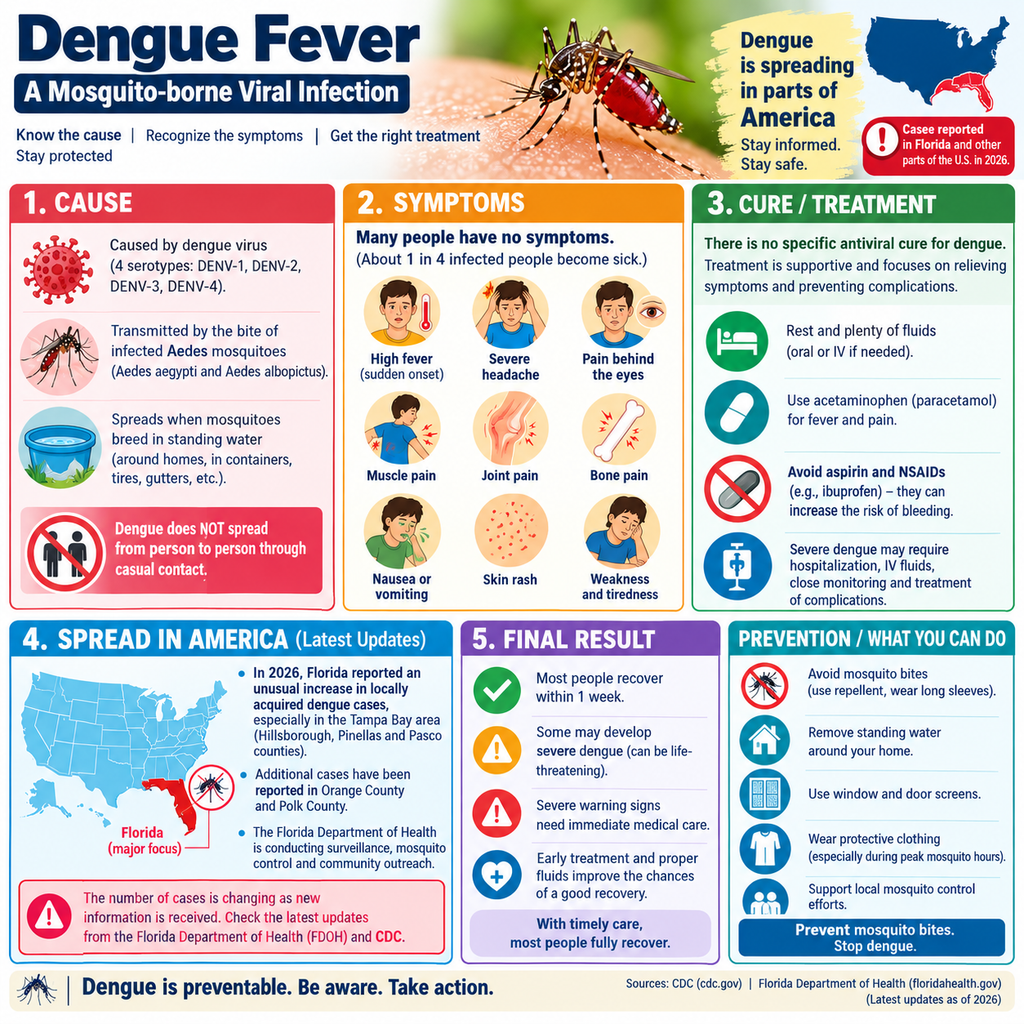
Dengue is a viral infection caused by one of four closely related dengue virus types, called serotypes. It is mainly transmitted through the bite of infected Aedes mosquitoes, particularly Aedes aegypti and Aedes albopictus.
A mosquito becomes infected when it bites a person carrying the dengue virus. The infected mosquito can subsequently transmit the virus to another person through a bite.
Dengue does not normally spread directly from person to person through ordinary casual contact.
Why Are Dengue Cases Increasing?
Several factors can contribute to increased dengue transmission.
1. Mosquito population
Warm and humid conditions can support the mosquitoes that transmit dengue. Standing water around homes, gardens and other locations can provide breeding sites.
** 2. International travel
Travel is an important factor in U.S. dengue surveillance. CDC’s analysis of 2024 data found 3,798 dengue cases reported from U.S. states and Washington, D.C.; 97.2% were associated with travel, while 2.8% were locally acquired.
3. Local mosquito transmission
When a competent mosquito bites an infected traveller, the virus can potentially enter a local transmission cycle.
4. Global dengue activity
Dengue has been increasing globally. CDC reports that worldwide dengue incidence increased substantially during recent years, with particularly large increases reported in the Americas.
Symptoms of Dengue
Many people infected with the dengue virus have no symptoms. CDC estimates that approximately one in four infected people becomes sick.
When symptoms occur, they commonly include:
- Sudden high fever
- Severe headache
- Pain behind the eyes
- Muscle pain
- Joint pain
- Bone pain
- Nausea or vomiting
- Skin rash
- Weakness and tiredness
Symptoms usually last around 2–7 days, and many people recover within about a week.
Because dengue symptoms can resemble influenza, COVID-19 and other viral infections, laboratory testing may be necessary to confirm the diagnosis.
Warning Signs of Severe Dengue
Dengue can occasionally progress to severe disease, sometimes within hours.
Seek urgent medical attention if a person with suspected dengue develops:
- Severe abdominal pain or tenderness
- Persistent or repeated vomiting
- Bleeding from the nose or gums
- Vomiting blood
- Blood in the stool
- Extreme tiredness, restlessness or irritability
- Signs of shock or difficulty breathing
CDC emphasises that severe dengue is a medical emergency. Warning signs may become noticeable, particularly around the time the fever is going away.
How Is Dengue Diagnosed?
A healthcare professional may suspect dengue based on symptoms, travel history, mosquito exposure and local transmission.
*A blood test is used to confirm dengue infection. Testing can also help distinguish dengue from other mosquito-borne infections such as Zika or chikungunya.
People with fever who have recently travelled to an area where dengue is circulating should inform their healthcare provider of their travel history.
Is There a Cure for Dengue?
At present, there is no specific antiviral cure for dengue.
Treatment is primarily supportive. The CDC recommends appropriate fluid intake, rest and symptom management. Acetaminophen (paracetamol) may be used for fever and pain when appropriate.
IMPORTANT – People with suspected dengue should not self-medicate with aspirin or NSAIDs such as ibuprofen until dengue has been ruled out, as these medicines can increase the risk of bleeding.
Patients with severe dengue may require hospital treatment, intravenous fluids, monitoring of blood pressure and blood counts, and management of bleeding or other complications.
Current Research on Dengue
Researchers are continuing to investigate better dengue treatments, vaccines and mosquito-control strategies.
A WHO report published in 2026 highlighted the need for the development of age-appropriate dengue medicines for children and noted that licensed treatment options remain limited beyond supportive care.
Public-health research is also focusing on improved mosquito surveillance, laboratory diagnosis, community education and vector-control programmes.
The CDC recommends that health departments investigate dengue infections and consider mosquito-control measures when the risk of transmission increases.
How Can You Prevent Dengue?
The best protection is to prevent mosquito bites and reduce mosquito breeding sites.
At home:
- Remove standing water from containers, pots and buckets.
- Keep water-storage containers covered.
- Clean gutters and other areas where water can collect.
- Use window and door screens.
- Wear long-sleeved clothing when mosquitoes are active.
- Use an EPA-registered insect repellent according to its label.
- Follow local public-health mosquito-control recommendations.
People who have dengue should also take precautions to avoid mosquito bites while they are ill, because mosquitoes can acquire the virus by biting an infected person and potentially transmit it to others.
US Dengue Outbreak 2026: What Should People Remember?
The current U.S. situation demonstrates why dengue surveillance remains important. Although most dengue cases reported in the continental United States have historically been associated with travel, locally acquired transmission can occur when infected mosquitoes are present.
The 2026 Florida outbreak has increased attention to local mosquito control and early recognition of dengue symptoms. Current CDC surveillance data are preliminary and subject to change, and reporting can be delayed.
Anyone experiencing a high fever with severe headache, body aches, rash or gastrointestinal symptoms—particularly after travel to a dengue-risk area or exposure in an area with local transmission—should contact a healthcare professional.
Conclusion
Dengue is a mosquito-borne viral disease that can be mild but can also become severe and life-threatening. The 2026 dengue situation in Florida shows that local transmission can occur in parts of the United States.
There is currently no specific antiviral cure, so early medical assessment, adequate hydration, appropriate fever management and recognition of warning signs are essential.
The most effective public-health strategy remains prevention: avoid mosquito bites, eliminate standing water and follow local health-department recommendations.
For the latest U.S. case numbers, readers should check CDC and state health-department surveillance because dengue figures can change as reports are received and verified.
Florida Department of Health: Dengue Surveillance Update 2026
Florida is conducting statewide surveillance for mosquito-borne diseases, including dengue. County health departments work with local mosquito-control programmes to investigate confirmed infections, monitor transmission and implement mosquito-control measures.
A particularly important area in 2026 has been Hillsborough County/Tampa Bay. On September 4, 2026, the Florida Department of Health reported 59 locally acquired dengue infections in Hillsborough County and described the increase as unusual. FDOH advised residents to use EPA-registered insect repellent, wear protective clothing and remove standing water.
The situation subsequently expanded. FDOH county alerts documented additional locally acquired cases in Orange County and Polk County, with local health departments coordinating with mosquito-control agencies for surveillance, inspections, treatment and community outreach.
FDOH Prevention Recommendations
The Florida Department of Health recommends the following measures:
1. Drain standing water.
Remove water from buckets, flowerpots, tyres, gutters, pool covers, toys and other containers around homes and businesses. Even small amounts of standing water can provide breeding sites for mosquitoes.
2. Cover your skin.
When outdoors, wear loose-fitting, long-sleeved shirts and long pants where practical.
3. Use mosquito repellent.
FDOH recommends an EPA-registered insect repellent, following the product label directions.
4. Protect the home.
Repair damaged window, door, porch and patio screens to reduce mosquitoes entering the house.
5. Community mosquito control
Local health departments are coordinating with mosquito-control agencies to conduct surveillance and targeted mosquito-control activities in affected communities.
Symptoms Reported by Florida Health Officials
FDOH describes dengue as a flu-like illness that can cause:
- Fever
- Severe muscle aches
- Joint pain
- Sometimes a skin rash
Respiratory symptoms are usually absent. FDOH also notes that symptoms can develop within 15 days after being bitten by an infected mosquito.
Important 2026 Update
I recommend that you add a date to every case-number statement, as Florida’s surveillance numbers are continually updated.
“According to Florida Department of Health updates published during September 2026, Florida has documented an unusual increase in locally acquired dengue, particularly in parts of the Tampa Bay region. County health departments are conducting surveillance and working with mosquito-control agencies to reduce transmission.”
This wording is safer than presenting one statewide number as a permanent total.
Official source: Florida Department of Health — Dengue and mosquito-borne disease information
Medical Disclaimer
This article is intended for general health education and awareness only. It does not constitute medical diagnosis, treatment or individualized medical advice. Dengue can become severe rapidly. If you or a family member has symptoms suggestive of dengue, especially severe abdominal pain, repeated vomiting, bleeding, extreme weakness, breathing difficulty or other warning signs, seek urgent medical care. Do not start or stop medicines based solely on this article. Always consult a qualified healthcare professional for diagnosis, testing and treatment.
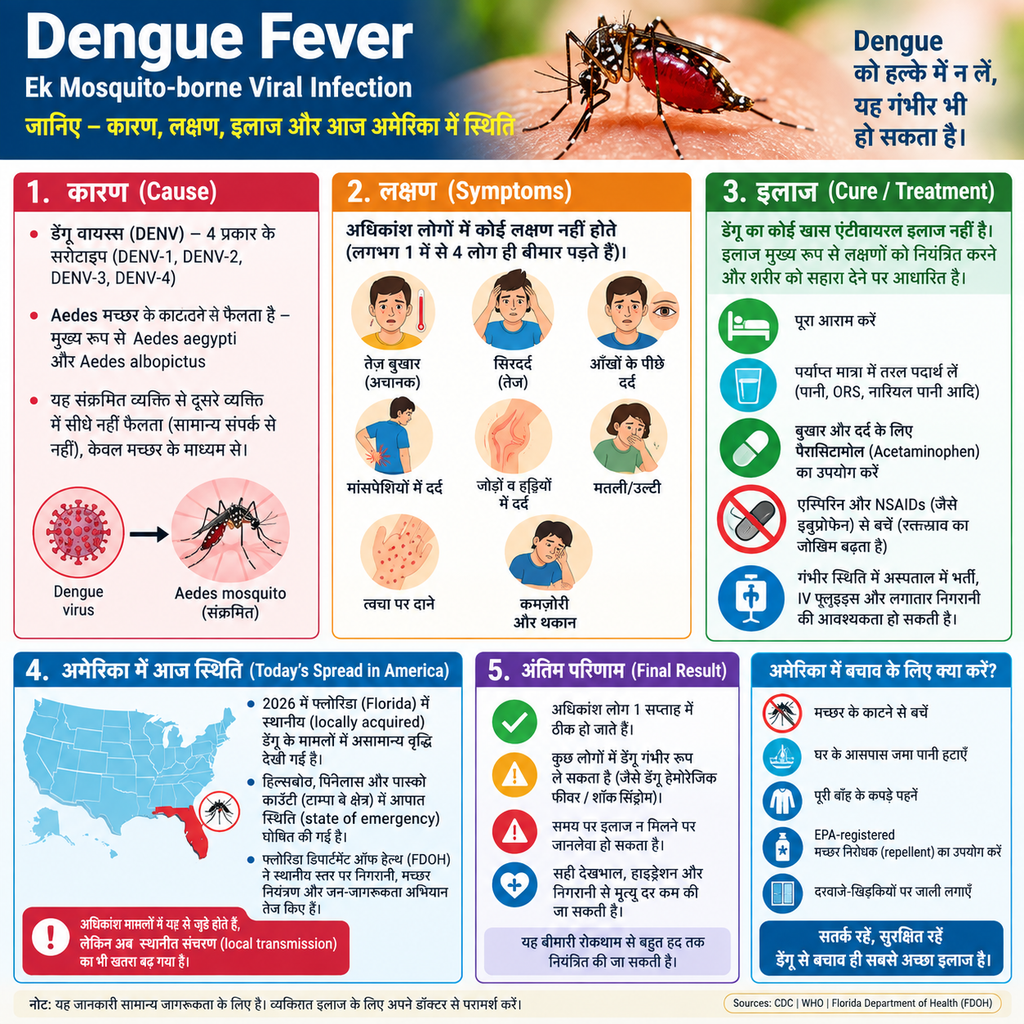
The image shows dengue causes, symptoms, and treatment, and the final result (Hindi)
The post was created by Dr Sailendra Kumar BHMS, medical officer under the NHM, INDIA.